



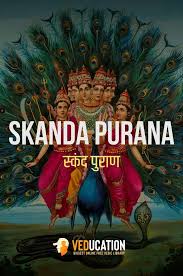
The Skanda Purana is the largest of the eighteen Mahapuranas of Hinduism, with more than 81,000 verses preserved across various manuscripts. It belongs to Kaumara literature—traditions associated with Skanda (Kartikeya/Murugan), the divine commander and son of Shiva and Parvati. The text has played a central role in shaping religious traditions connected with Skanda, Shaivism, sacred geography, and numerous regional pilgrimage cults across India. Because of its size, complexity, and extensive later additions, the Skanda Purana is considered one of the most dynamic and fluid Puranas, with many recensions and regional adaptations.
The Vamana Purana is one of the eighteen Mahapuranas of Hinduism and is composed in Sanskrit. Named after the Vamana avatar of Lord Vishnu, this Purana is traditionally associated with Vaishnavism. However, surviving manuscripts reveal that the text today contains significant Shaiva content, extensive Tirtha Mahatmyas (pilgrimage guides), and hymns celebrating multiple deities. Because of its layered evolution and regional adaptations, the Vamana Purana is considered a multi thematic, non sectarian scripture that blends mythology, sacred geography, and devotional teachings.
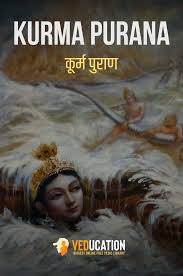
The Kurma Purana is one of the eighteen Mahapuranas of Hinduism and is traditionally regarded as a Vaishnava scripture, named after Vishnu’s Kurma (tortoise) avatar. The text, however, is not exclusively Vaishnava—its stories, philosophy, and rituals draw from Shaivism, Shaktism, and broader Hindu traditions, making it a diverse and encyclopedic Purana. Like many ancient scriptures, the Kurma Purana survives in multiple manuscript versions, each containing important variations, additions, and restructured chapters.
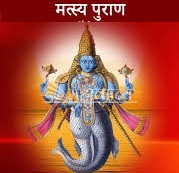
The Matsya Purana is one of the eighteen Mahapuranas of Hinduism and is considered among the oldest and best preserved texts in the Puranic tradition. Named after the Matsya avatar of Lord Vishnu—a half fish, half human form—the Purana narrates the story of the cosmic flood and the preservation of life, knowledge, and dharma. It is a foundational Vaishnava scripture, yet it also contains extensive material on Shiva, Shakti, temple architecture, rituals, yoga, pilgrimage traditions, and social ethics, making it an encyclopedic work.
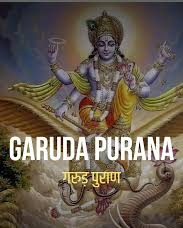
The Garuda Purana is one of Hinduism’s eighteen Mahapuranas and a major scripture within the Vaishnava tradition. Written originally in Sanskrit, the text records a profound dialogue between Lord Vishnu and Garuda, Vishnu’s divine mount. It covers an extraordinary range of subjects, including: • Cosmology and creation • Dharma and ethics • Yoga and meditation • Temple architecture • Gemology and medicine • Afterlife, karma, and rebirth • Funeral rites and liberation Today, the Garuda Purana is commonly available in Sanskrit, Hindi, Gujarati, English, and many other Indian languages.
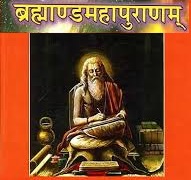
The Brahmanda Purana is one of Hinduism’s eighteen Mahapuranas, composed in Sanskrit, and is traditionally placed as the 18th Purana in classical anthologies. The title Brahmanda refers to the ancient Hindu cosmological concept of the “Cosmic Egg” (Brahmanda), from which the entire universe emerges. It is a vast and multi-layered text containing mythology, cosmology, philosophy, sacred geography, and devotional literature.