



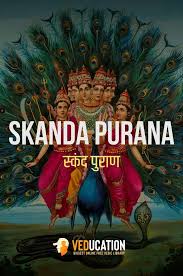
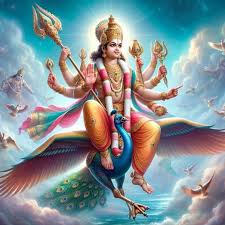
The Skanda Purana is the largest of the eighteen Mahapuranas of Hinduism, with more than 81,000 verses preserved across various manuscripts. It belongs to Kaumara literature—traditions associated with Skanda (Kartikeya/Murugan), the divine commander and son of Shiva and Parvati. The text has played a central role in shaping religious traditions connected with Skanda, Shaivism, sacred geography, and numerous regional pilgrimage cults across India. Because of its size, complexity, and extensive later additions, the Skanda Purana is considered one of the most dynamic and fluid Puranas, with many recensions and regional adaptations.
Date of Composition
Dating the Skanda Purana is challenging due to multiple
recensions and centuries of redactions. However, scholarly research provides
the following insights:
Earliest Manuscripts
Scholarly Estimates
Regional Provenance
Because so many versions exist, scholars agree that the
Skanda Purana is not a single fixed text, but a large body of
evolving literature.
Links to download
Hindi :
Skanda Puran (HN)
English : Skanda Purana (EN)
Significance of the Skanda Purana
The Skanda Purana covers an exceptional range of
mythological, ritualistic, and historical themes. Major highlights include:
1. Legends Related to Shiva, Parvati, and Skanda
2. Sacred Geography and Pilgrimage
Scholars believe the main purpose of the Skanda Purana was
to sanctify the sacred landscape of India.
Thus, the Purana is rich in Mahatmyas (pilgrimage guides) describing
holy regions, temples, rivers, mountains, and tirthas.
3. Importance for Shaivism & Regional Traditions
Structure of the Skanda Purana
The Skanda Purana is extremely large and organized in multiple ways across manuscripts. Two major classification systems are used:
A. The Seven Khandas (Major Books)
These divisions correspond to major pilgrimage regions:
1. Maheshvara Khanda
2. Vishnu Khanda
Includes nine sub-sections, covering:
3. Brahma Khanda
4. Kashi Khanda
5. Avantya Khanda
6. Nāgara Khanda
7. Prabhāsa Khanda
B. The Six Samhitas (Theological Divisions)
Some manuscripts divide the Purana into six Samhitas, including
Sanatkumāra Saṁhitā
Sūta Saṁhitā
Śaṁkarī Saṁhitā
Vaiṣṇavī Saṁhitā
Brāhmī Saṁhitā
Saura Saṁhitā
These Samhitas explore Shaiva, Vaishnava, and Shakta theology and various ritual traditions.
Additional Regional Texts
Many regional works claim affiliation with the Skanda
Purana, such as:
These texts add local legends, tirthas, and temple histories.
Narrative Themes
The Skanda Purana contains a vast range of mythologies and
stories, such as:
The text also provides socio-cultural context
related to medieval Shaiva communities, sectarian conflicts, and evolving
ritual landscapes.
Size and Language
Authorship
Traditionally attributed to Sage Vyasa, but the text
clearly reflects multiple authors and redactors over many centuries.
The oldest palm‑leaf manuscripts discovered in Nepal date to the 7th–8th
century CE.
Conclusion
The Skanda Purana is not only the largest of the
Mahapuranas but also one of the most culturally influential.
Its blend of mythology, sacred geography, pilgrimage guides, and Shaiva
theology makes it a cornerstone of Hindu religious literature.
While its numerous recensions make it difficult to define a single “original”
version, the Skanda Purana remains an essential source for understanding Indian
ritual traditions, temple culture, and the devotional heritage surrounding
Skanda, Shiva, and the sacred landscape of India.
Links to download
Hindi : Skanda Puran (HN)
English : Skanda Purana (EN)