



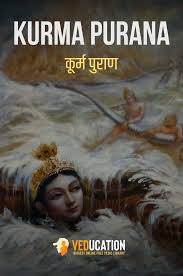
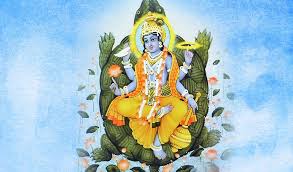
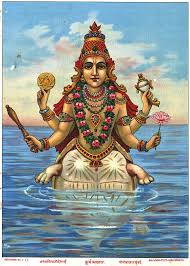
The Kurma Purana is one of the eighteen Mahapuranas of Hinduism and is traditionally regarded as a Vaishnava scripture, named after Vishnu’s Kurma (tortoise) avatar. The text, however, is not exclusively Vaishnava—its stories, philosophy, and rituals draw from Shaivism, Shaktism, and broader Hindu traditions, making it a diverse and encyclopedic Purana. Like many ancient scriptures, the Kurma Purana survives in multiple manuscript versions, each containing important variations, additions, and restructured chapters.
Date of Composition
The composition of the Kurma Purana is difficult to
determine precisely due to its layered nature. Scholars generally conclude:
Modern scholars emphasize that Puranas are “living
texts”, continuously expanded, recopied, and reshaped. As Dimmitt and van
Buitenen famously noted:
“The Puranas are layered literature. Each text acts like a
library, with new volumes added over time.”
This makes the Kurma Purana a composite work reflecting
diverse historical periods and philosophical perspectives.
Links to download
Hindi :
Kurma Puran (HN)
Significance of the Kurma Purana
Despite being named after Vishnu's Kurma avatar, the
text contains a fascinating mixture of:
Scholars find it especially interesting because:
This blend of traditions makes it one of the most
syncretic of all Mahapuranas.
Structure of the Kurma Purana
While the text survives in several recensions, all versions
follow a basic two-part structure:
1. Purva‑vibhaga (Earlier Section)
2. Upari‑vibhaga (Later Section)
The total number of chapters varies across manuscripts.
Tradition claims the Purana originally had 17,000 verses, but surviving
manuscripts contain only around 6,000.
Key Philosophical Teachings (Summary)
1. Ishvara‑Gita
One of the most important sections, the Ishvara‑Gita,
is:
In this discourse, Vishnu asks Shiva to reveal the truth of
existence, leading to a profound exploration of:
2. Inclusivity of Bhakti
The Kurma Purana emphasizes that:
This makes the text spiritually inclusive and socially
progressive.
3. Sacred Geography
The Purana provides:
These Mahatmyas were important for medieval pilgrims.
4. Interplay of Shaiva and Vaishnava Traditions
While named after an avatar of Vishnu, the Kurma Purana:
Manuscript Variations
The Kurma Purana is preserved in many forms:
This diversity reflects the Purana’s fluid and evolving
nature.
Language
Authorship
Traditionally attributed to Ved Vyasa, as with all
Puranas.
However, scholars see clear evidence of multiple authors across various
centuries.
Conclusion
The Kurma Purana is a rich, multi-dimensional
scripture that blends Vaishnava, Shaiva, and Shakta traditions.
Its combination of sacred geography, philosophical discourse, mythology, and
spiritual guidance makes it a major source for understanding:
Despite its fragmented manuscript history, the Kurma Purana
remains one of the most culturally influential and philosophically
important Puranas.
Links to download
Hindi : Kurma Puran (HN)