



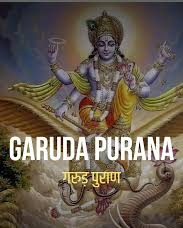
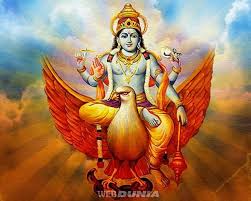
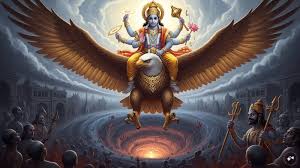
The Garuda Purana is one of Hinduism’s eighteen Mahapuranas and a major scripture within the Vaishnava tradition. Written originally in Sanskrit, the text records a profound dialogue between Lord Vishnu and Garuda, Vishnu’s divine mount. It covers an extraordinary range of subjects, including: • Cosmology and creation • Dharma and ethics • Yoga and meditation • Temple architecture • Gemology and medicine • Afterlife, karma, and rebirth • Funeral rites and liberation Today, the Garuda Purana is commonly available in Sanskrit, Hindi, Gujarati, English, and many other Indian languages.
Date of Composition
The Garuda Purana is a layered text that evolved over
many centuries. Scholars give different estimates:
Scholars such as Pintchman, Gietz, Chaudhuri, Hazra, and
Doniger place its major development within this broad chronological range.
Over time, many recensions emerged under related names:
Several modern publishers mistakenly circulated Garudapurana‑saroddhara,
an abridged digest that is not the actual Garuda Purana—an error first
corrected by Albrecht Weber.
Links to download
Hindi : Garuda Puran (HN)
English : Garuda Puran (EN)
Significance of the Garuda Purana
The Purana is spiritually important because it provides:
1. Teachings on Karma, Death & Rebirth
Garuda asks Vishnu about:
These teachings form the foundation of many Hindu beliefs
about afterlife and moksha.
2. Guidance on Eternal Dharma
The text emphasizes righteous living based on:
3. Theological and Philosophical Insights
It explains the nature of:
Structure of the Garuda Purana
The Purana is traditionally said to contain 19,000
verses, though surviving manuscripts preserve around 8,000.
It has two major parts:
1. Purva Khanda (Early Section)
≈ 90% of the text
Covers:
Purva Khanda contains 229–243 chapters, depending on the version.
2. Uttara Khanda (Later Section)
Also known as:
Contains 34–49 chapters and focuses on:
This is the section commonly recited during funeral
rites.
Summary of Key Content
1. Cosmology & Metaphysics
The Purana presents a universe created through the union
of:
It harmonizes Samkhya philosophy with Vaishnava
theology, presenting Purusha and Prakriti as inseparable principles.
The human body is portrayed as a microcosm of the universe, governed by the same cosmic laws.
2. Worship & Festivals
The Garuda Purana describes:
It also includes pilgrimage Mahatmyas associated with Vishnu’s sacred sites.
3. Temple Architecture
Chapter 47 provides a detailed 8x8 (64-square) temple
design grid.
It includes guidance on:
This section is valuable for historians of Indian architecture.
4. Gemology (Ratna Shastra)
The Purana examines 14 gemstones, including:
It describes:
The gemology chapter is a blend of science, ritual, and astrology.
5. Codes of Virtue (Dharma Shastra)
Chapter 93 outlines teachings of Sage Yajnavalkya,
including:
It warns against greed, falsehood, cruelty, and unethical wealth.
6. Governance & Raja Dharma
The Neeti Shastra section (Chapters 111+):
These teachings influenced later Hindu political literature.
7. Medicine – Dhanvantari Samhita
Chapters 146–218 form a medical compendium
covering:
Many sections align closely with classical Ayurveda texts like Sushruta Samhita and Ashtanga Hridaya.
8. Veterinary Medicine
Chapter 226 describes diseases and treatments for
horses, including:
9. Yoga & Brahma Gita
The last 10 chapters of Purva Khanda are known as Brahma
Gita, describing:
The teachings emphasize self‑realization through
meditation and devotion.
Language
Authorship
Traditionally attributed to Sage Vyasa, the
compiler of all Puranas.
Modern scholars recognize it as a multi‑author, multi‑century text.
Conclusion
The Garuda Purana stands out as a rich and
multidimensional scripture that blends:
Its teachings on death, karma, and dharma make it one of
the most widely read and culturally influential Puranas in Hinduism.
Links to download
Hindi : Garuda Puran (HN)
English : Garuda Puran (EN)