



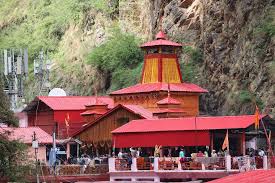
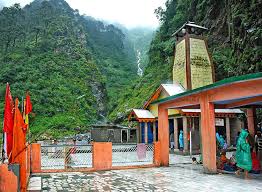
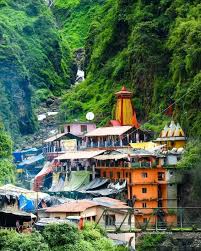
Yamunotri Temple, nestled at an elevation of 3,293 meters (10,804 ft) in the Uttarkashi district of Uttarakhand, marks the divine origin of River Yamuna, India’s second holiest river. Surrounded by rugged Himalayan peaks, dense forests, and gushing streams, this sacred shrine is the first pilgrimage destination of the Chota Char Dham Yatra, dedicated to Goddess Yamuna. The temple houses a stunning black marble idol of Maa Yamuna, adorned with garlands and silver embellishments. Its spiritual atmosphere, combined with the region’s natural beauty, makes Yamunotri a deeply revered place for devotees seeking purification and blessings. Yamunotri is accessible only by a 6 km trek from Janki Chatti or a 13 km trek from Hanuman Chatti, with ponies, palanquins (dandi), and basket carriers available for those who prefer not to walk.
History
of Yamunotri Temple
The
original Yamunotri Temple is believed to date back several centuries but was
formally constructed in 1839 by King Naresh Sudarshan Shah of Tehri
Garhwal. After suffering earthquake damage, it was later restored by Maharani
Gularia of Jaipur in the 19th century.
The
sacred site has deep mythological roots:
The
temple stands before the towering peak of Bandarpunch (6,315 m), from
where the Yamuna Glacier descends.
Architecture
of Yamunotri Temple
Yamunotri
Temple beautifully represents the Nagara school of Himalayan architecture.
Key
architectural features:
Natural
Hot Springs
Yamunotri
is famous for its steaming geothermal springs:
Surya
Kund
Divya
Shila
Origin
of the River Yamuna & Associated Legends
River
Yamuna originates from the Yamunotri Glacier, located near Kalind
Parbat (Kalinda Mountain) at a height of 6,315 meters. The river
flows through Saptarishi Kund and descends in cascading streams.
Connections:
Religious
Activities & Temple Timings
Temple
Timings
Daily
darshan hours:
Aarti
Timings
The
temple opens every year on Akshaya Tritiya (April/May) and closes on Yama
Dwitiya/Bhai Dooj (Oct–Nov) due to harsh winter snowfall.
During
winter, the idol of Goddess Yamuna is moved to Kharsali Village,
her winter abode, where she is worshipped until reopening.
Major
Festivals
Akshaya
Tritiya
Yama
Dwitiya (Bhai Dooj)
Other
Celebrations:
How
to Reach Yamunotri
Map
<iframe src="https://www.google.com/maps/embed?pb=!1m18!1m12!1m3!1d2453.6369183508637!2d78.46034067387221!3d30.99973577268278!2m3!1f0!2f0!3f0!3m2!1i1024!2i768!4f13.1!3m3!1m2!1s0x39089b4d105c9b49%3A0x9927c63a2fd2e8cc!2sYamunotri%20Temple%20Uttarakhand!5e1!3m2!1sen!2sin!4v1778570367805!5m2!1sen!2sin" width="600" height="450" style="border:0;" allowfullscreen="" loading="lazy" referrerpolicy="no-referrer-when-downgrade"></iframe>
By
Air
By
Rail
Nearest
railway stations:
From
these stations, travelers can hire taxis or buses to reach Janki Chatti.
By
Road
Yamunotri
is well-connected via:
Trek
Routes
Nearby
Temples & Attractions
Surya
Kund
Hot
spring where prasadam is prepared; dedicated to Surya, father of Yamuna.
Divya
Shila
Sacred
rock worshipped prior to entering the temple.
Gaumukh
& Tapovan
The
perennial source of the Ganga; breathtaking trekking routes with scenic
Himalayan vistas.
Bhairon
Ghati
10
km from Gangotri; known for the Bhairon Nath Temple, protector of the region.
Kharsali
Village
Winter
home of Goddess Yamuna; known for ancient temples and scenic beauty.
Contact
Information