



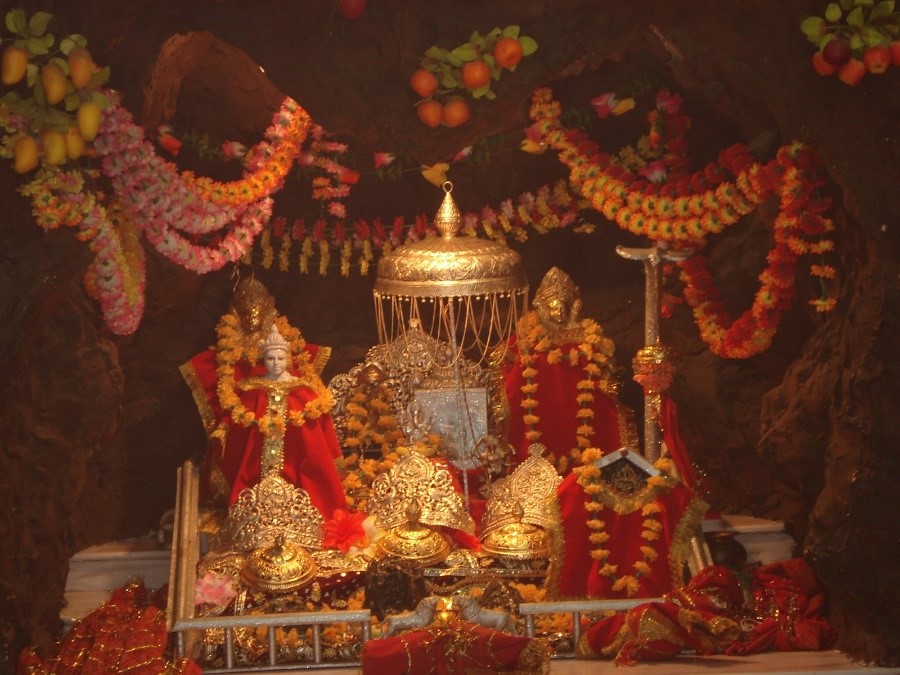
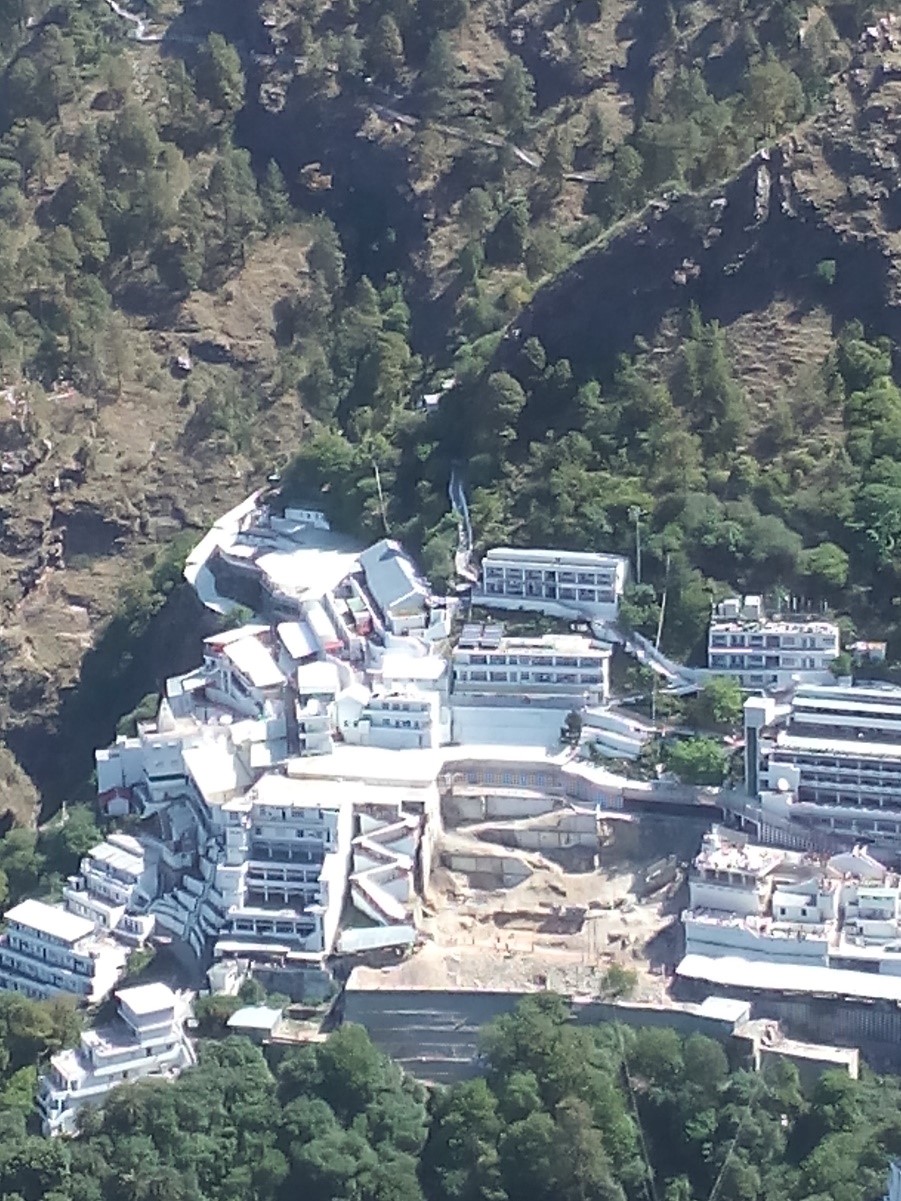
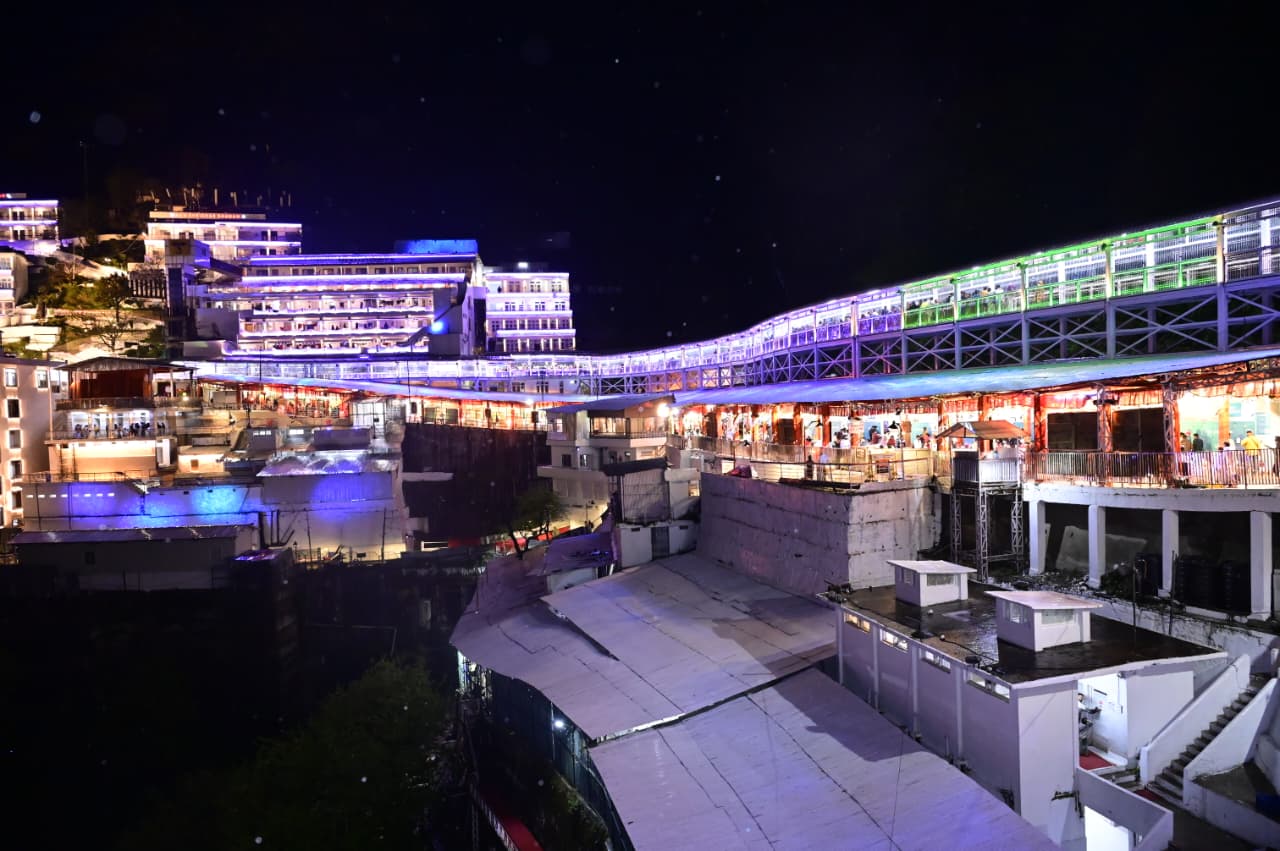
Shri Mata Vaishno Devi Temple is one of the most revered Hindu pilgrimage sites in India, dedicated to Mata Vaishno Devi, a manifestation of the Supreme Feminine Power (Shakti). The temple is located in the Trikuta Mountains near Katra, in the Union Territory of Jammu & Kashmir, at an altitude of approximately 5,200 feet (1,585 meters). The holy shrine is nestled inside a natural cave (Holy Cave) and is traditionally regarded as one of the most important Shakti shrines in the Indian subcontinent. Devotees believe that a pilgrimage to the shrine is not possible without the divine call of the Mother, popularly known as “Mata ka Bulawa.” Millions of pilgrims from India and abroad visit the shrine every year. During major festivals such as Navratri, the number of devotees increases significantly.
Historic
Background
Ancient
References
Although there is no single dated historical record of the temple’s construction, references to Trikuta Parvat appear in ancient Hindu texts, including the Rigveda. Worship of the Mother Goddess in this region is also associated with events mentioned in the Mahabharata. According to tradition, Lord Krishna advised Arjuna to seek the blessings of Goddess Vaishno Devi before the Kurukshetra War. Arjuna praised the Goddess as the supreme Yogini and the giver of victory, associating her with the hills of Jambhu, believed to be present‑day Jammu.
Discovery
of the Holy Shrine
The
discovery of the Holy Cave is widely attributed to Pandit Shridhar, around 700
years ago. As per legend, Mata Vaishno Devi appeared to him in a divine vision
and guided him to her abode in the Trikuta Mountains. Inside the cave, Pandit
Shridhar discovered the rock formation with three natural heads, now worshipped
as the Holy Pindies.
Pandit
Shridhar was granted the privilege of worship, and he dedicated his entire life
to the service of the Mother. His lineage continues traditional worship even
today.
The
Divine Call – Mata Ka Bulawa
A
unique belief associated with Shri Mata Vaishno Devi Ji is the “Call of the
Mother.” Devotees firmly believe that no one reaches the shrine unless Mata
herself invites them. This belief is deeply rooted in local tradition and is
expressed through the saying:
“Maan
Aap Bulandi” – The Mother Herself Calls
Pilgrims
believe that once the call is received, obstacles dissolve and the journey
completes under her divine guidance.
Darshan
in the Holy Cave
The Holy
Cave is the spiritual heart of the pilgrimage. Unlike other temples, there are no
idols or statues inside the cave.
The
Holy Pindies
Darshan
is performed of three natural rock formations, called Pindies, which emerge
from a single rock but differ in texture and color:
Mata
Maha Kali (Right)
Mata
Maha Lakshmi (Center)
Mata
Maha Saraswati (Left)
Collectively,
Shri Mata Vaishno Devi Ji is believed to be the manifestation of all three
supreme cosmic energies.
Vaishno
Devi and Bhairavnath
The
legend of Bhairavnath forms an integral part of the yatra. Bhairavnath pursued
Mata Vaishno Devi, disturbing her meditation. After a long chase through sites
such as Banganga, Charan Paduka, Adi Kumari, and Bhawan, Mata ultimately
assumed the fierce form of Chamunda and severed his head.
Upon
repentance, Bhairavnath was forgiven and granted liberation. Mata decreed that every
pilgrimage remains incomplete without Bhairavnath Darshan, symbolizing humility
and redemption.
The Bhairavnath
Temple is located on a nearby hilltop.
Daily
Darshan Timings
Temple
Open Daily
Aarti
Timings
(Timings
may vary on festival days.)
Pooja
& Special Rituals
Individual
Poojan
Shradha
Suman Vishesh Pooja Package
Includes:
Helicopter
Services
How
to Reach Vaishno Devi
Map
Base
Camp – Katra
Katra
is the starting point of the pilgrimage and is well connected.
By
Air
By
Rail
By
Road
Nearby
Places to Visit
Festivals
at Vaishno Devi
The
shrine remains open to devotees from all regions, traditions, and spiritual
paths.
Contact
Information (Official)
Phone: +91‑1991‑234804
Email: online@maavaishnodevi.org, helpdesk@maavaishnodevi.org, admin@maavaishnodevi.org
Address: Shri Mata Vaishno Devi Shrine, Katra, Jammu & Kashmir – 182301, India
Conclusion
Shri
Mata Vaishno Devi Temple is not just a pilgrimage—it is a spiritual awakening.
Rooted in ancient belief, guided by divine legends, and sustained by unwavering
devotion, the shrine stands as a timeless symbol of faith, balance, and divine
grace.