



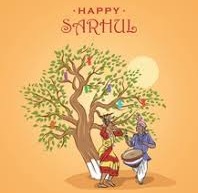
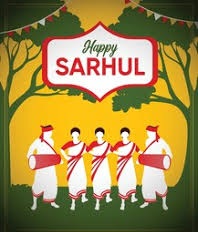
Sarhul is one of the most important tribal festivals celebrated in Jharkhand, particularly among the Munda, Oraon, and Ho communities. Observed during the spring season, Sarhul marks the arrival of new blossoms on the Sal (Saal) trees, symbolizing renewal, fertility, and gratitude toward nature. The festival is a tribute to the village deity, believed to be the guardian and protector of the tribal community. As the first flowers bloom, people break into traditional songs and dances, offering Sal flowers to honor the divine spirit of nature. The roots of Sarhul are believed to go back to ancient times, with some tales tracing its origin to the Mahabharata era. Traditionally, the festival is held as a spring thanksgiving ritual, expressing devotion to the guardian deity of the village.
🌿 Significance of
Sarhul Festival
The
festival revolves around the sacred Sal tree, which provides shelter, firewood,
and protection to the tribes. Tribes believe the tree embodies Mother Nature
(Prakriti), and thus offerings are made at the base of selected Sal trees found
in sacred groves known as “Jaher” (holy forest).
Celebrated
in mid‑April, Sarhul marks:
Before
the community consumes any new harvest, it is first offered to the deity,
showing reverence and gratitude. Only after the ceremonial offerings does the
joyous music, dance, and festivities begin.
At
the heart of Sarhul lies the prayer for good rains, fertile soil, and a
prosperous year.
🕉 Deity Worshipped
The
festival is dedicated to the village deity, revered as the protector of the
tribes and the guardian of the land.
🙏 Sarhul Rituals (Puja
& Traditions)
The
rituals are led by the village priest, known as the Pahan, assisted by Panbhara,
his helper.
Major
rituals include:
After
the rituals conclude, the community engages in:
These
rituals reflect unity, respect for nature, and tribal cultural identity.
🎉 Celebrations Across
Communities
Sarhul
is celebrated primarily by:
Key
festivities include:
The
festival beautifully blends nature worship, tribal culture, and community
bonding.
🍛 Traditional Foods of
Sarhul
Popular
dishes enjoyed during the festival include:
🎁 Offerings &
Gifts
Common
offerings during the rituals:
📍 Best Places to
Experience Sarhul
📅 Date & Time 2026
Sarhul
is celebrated on Chaitra Shukla Tritiya, the third day of the waxing moon in
the Hindu month of Chaitra (March–April).
🏛 Public Holiday