



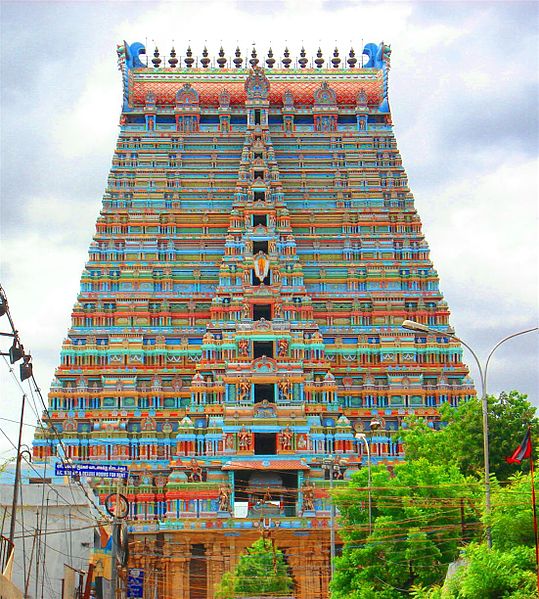
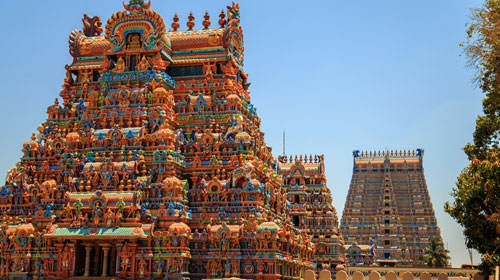
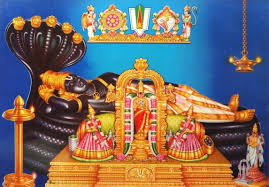
The Sri Ranganathaswamy Temple in Srirangam, Tiruchirappalli, is one of the most revered and historically significant Vishnu temples in India. Recognized as the first and foremost of the 108 Divya Desams, Srirangam is also the first among the eight Swayam Vyakta Kshetras—sacred temples where Lord Vishnu manifested on His own. The temple is affectionately known as (i) Periyakoil (ii) Thiruvarangam (iii) Bhoologa Vaikundam (Heaven on Earth) (iv) Bhogamandabam Among Vaishnavas, the term “Koil” itself traditionally refers only to Srirangam, highlighting its supremacy. Spread across 156 acres, Srirangam is the largest functioning Hindu temple complex in the world, featuring (i) • Seven concentric enclosures (prakaras) (ii) 21 ornate gopurams (towers) (iii) One of the tallest temple towers in Asia, the Rajagopuram The temple sits beautifully on an island formed by the Cauvery and Coleroon rivers, making it both spiritually significant and naturally scenic. The presiding deity, Lord Ranganathar (Vishnu), is worshipped in the Ananta Shayana posture—resting on the serpent Adisesha—while Goddess Ranganayaki Thayar (Lakshmi) is enshrined in a separate sanctum.
History
& Significance
Sri
Ranganathaswamy Temple is steeped in mythology, spiritual lore, and historical
grandeur.
Key
Historical Highlights
The
temple is also renowned for its Vaikunta Ekadasi festival, where
millions of devotees enter through the sacred Paramapada Vasal (Gate to
Heaven).
Architectural
Structure
The
temple’s layout is uniquely distinguished by its seven enclosures,
symbolic of the seven chakras or the seven elements of the human body.
Seventh
Enclosure (Outer Prakaram)
Sixth
Enclosure
Fifth
Enclosure
Fourth
Enclosure
The
Thousand Pillar Hall hosts grand celebrations during Ekadasi and
displays beautiful sculptures of gods, goddesses, Alwars, and Acharyas.
Third
Enclosure
Second
Enclosure
First
Enclosure (Inner Sanctum)
This
zone leads directly to the garbhagriha, where the magnificent reclining
Lord Ranganathar resides.
Deities
Worshipped
Primary
Deities
Other
Important Shrines
Daily Pooja & Darshan Timings
Daily Pooja & Darshan Timings
Sri Ranganathar Sannathi Schedule
Viswaroopa
Seva
🕕 06:00 AM – 07:15
AM
Pooja
Time (No Darshan)
🕢 07:15 AM – 09:00
AM
General
Darshan
🕘 09:00 AM – 12:00
PM
Pooja
Time (No Darshan)
🕛 12:00 PM – 01:15
PM
Darshan
🕐 01:15 PM – 06:00
PM
Pooja
Time (No Darshan)
🕕 06:00 PM – 06:45
PM
Darshan
🕠 06:45 PM – 09:00
PM
Offerings
/ Sevas
Guidelines
for Pilgrims
Do’s
Don’ts
Visitor
Guide
Map
The
temple is easily accessible from:
It
is one of South India’s most visited pilgrimage destinations, especially during
festivals like Vaikunta Ekadasi.
Nearby
Tourist Attractions
Jambukeswarar
Temple (Thiruvanaikaval)
0.9
km from Srirangam; dedicated to Lord Shiva representing the Water element.
Rock
Fort Temple (Uchipillayar Temple)
3.7
km away; located atop a massive rock offering brilliant city views.
Kallanai
Dam (Grand Anicut)
An
ancient engineering marvel built by King Karikalan Chola, about 3 km from
Srirangam.
Contact
Information
Phone: +91
431 2432246
Email: srirangamtemple@gmail.com
Address:
Sri Ranganathar Swamy Temple
Srirangam, Tiruchirappalli – 620006
Tamil Nadu, India
Official
Website:
https://srirangamranganathar.hrce.tn.gov.in/