



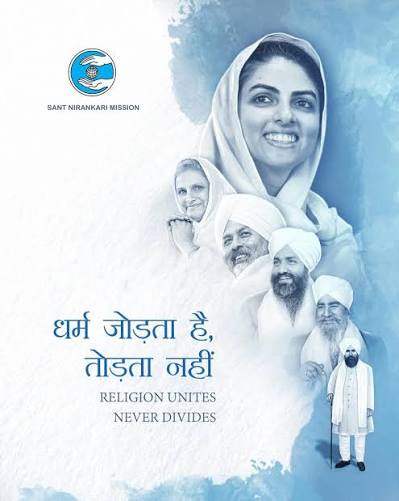
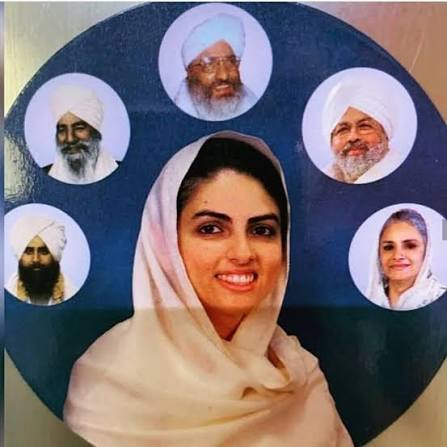

The Sant Nirankari Mission, also widely known as the Universal Brotherhood Mission, is a global spiritual movement headquartered in Delhi, India. It is a non-sectarian organisation that promotes peace, unity, and God-realisation beyond the barriers of caste, creed, and religion. Unlike traditional religions, the Mission defines itself as a spiritual path focused on human welfare, helping individuals experience the Formless God (Nirankar) through the blessings of a living spiritual guide, known as the Satguru.
Founder
and Establishment
The
Sant Nirankari Mission was founded in 1929 by Baba Buta Singh Ji, who
introduced the divine message of realizing the one formless Almighty.
The
Mission began when Baba Avtar Singh Ji met Baba Buta Singh Ji on May 25, 1929,
marking the formal start of this spiritual movement. Over time, this small
initiative evolved into a worldwide organisation with millions of followers.
Historical
Evolution of the Mission
The
leadership of the Sant Nirankari Mission has been carried forward through a
respected Satguru tradition:
Today,
the Mission operates through thousands of branches in over 70 countries,
promoting spiritual awareness and social harmony.
Core
Philosophy and Ideology
1.
Belief in One Formless God
The
Mission teaches that there is one universal, formless God (Nirankar), known by
different names such as Allah, Ishwar, or Vitthal.
2.
Role of the Living Satguru
God-realisation
is achieved through the grace of a living Satguru, who provides spiritual
knowledge (Brahmgyan) and guidance.
3.
Practical Spirituality
The
Mission emphasizes a balanced life, combining spirituality with everyday
responsibilities rather than renouncing the world.
4.
Universal Brotherhood
A
key belief is that all humanity belongs to one family, promoting peace,
equality, and non-discrimination.
Meaning
of Being a Nirankari
A
follower of the Mission, known as a Nirankari, strives to live a life guided
by:
This
lifestyle focuses on inner transformation rather than external rituals.
Key
Spiritual Practices
The
teachings of the Sant Nirankari Mission revolve around three primary practices:
1.
Sewa (Selfless Service)
Serving
humanity without expectation is considered a divine responsibility and a
blessing.
2.
Simran (Remembrance of God)
Devotees
practice mindful remembrance of God through simple lines:
3.
Satsang (Spiritual Gatherings)
Regular
congregations help individuals deepen their understanding of divine knowledge
and connect with like-minded seekers.
Five
Principles of the Mission
Followers
are encouraged to live by five foundational values:
1. Use
body, mind, and wealth as gifts from God without ego
2. Avoid
pride based on caste, religion, or social status
3. Do
not discriminate based on lifestyle or beliefs
4. Live
responsibly within family and society
5. Respect
divine knowledge received from the Satguru
Major
Activities and Global Presence
The
Sant Nirankari Mission actively contributes to society through:
These
initiatives are carried out through organisations such as the Sant Nirankari
Charitable Foundation, demonstrating a commitment to global welfare.
Sant
Nirankari Sewadal
The
Sant Nirankari Sewadal is a dedicated volunteer force that plays a key role in
organising events and providing humanitarian service worldwide.
Their
guiding principle:
Serving
humanity is equal to serving God.
Major
Spiritual Events
1.
Annual Nirankari Sant Samagam
A
large international gathering promoting spiritual learning, unity, and
brotherhood.
2.
Manav Ekta Diwas
Observed
on April 24 to honour unity and human welfare.
3.
Samarpan Diwas
Dedicated
to the life and teachings of Baba Hardev Singh Ji.
4.
Mukti Parv
Focuses
on spiritual liberation and the purpose of human life.
Mission’s
Global Vision
Over
the decades, the Sant Nirankari Mission has become synonymous with:
Its
core message is simple yet powerful:
“One God, One Humanity, One Family.”
Contact
Information
Links
for
1. Media
Studio
Devine: https://nirankari.org/media/studio-divine/
Music:
https://nirankari.org/music-2/
Podcasts: https://nirankari.org/media/podcasts/
Publications:
https://nirankari.org/publication/
2.
Live: https://live.nirankari.org/
3. Calendar:
https://nirankari.org/#the_calendar
Conclusion