



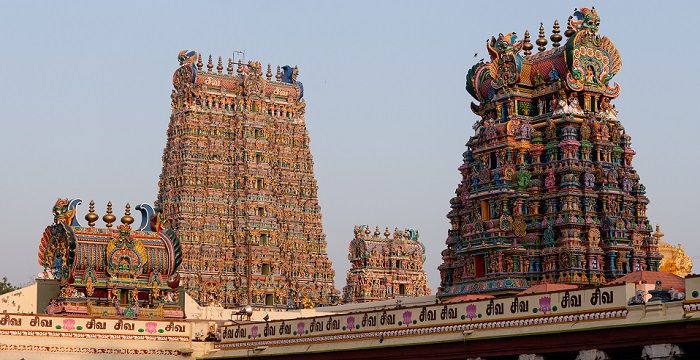
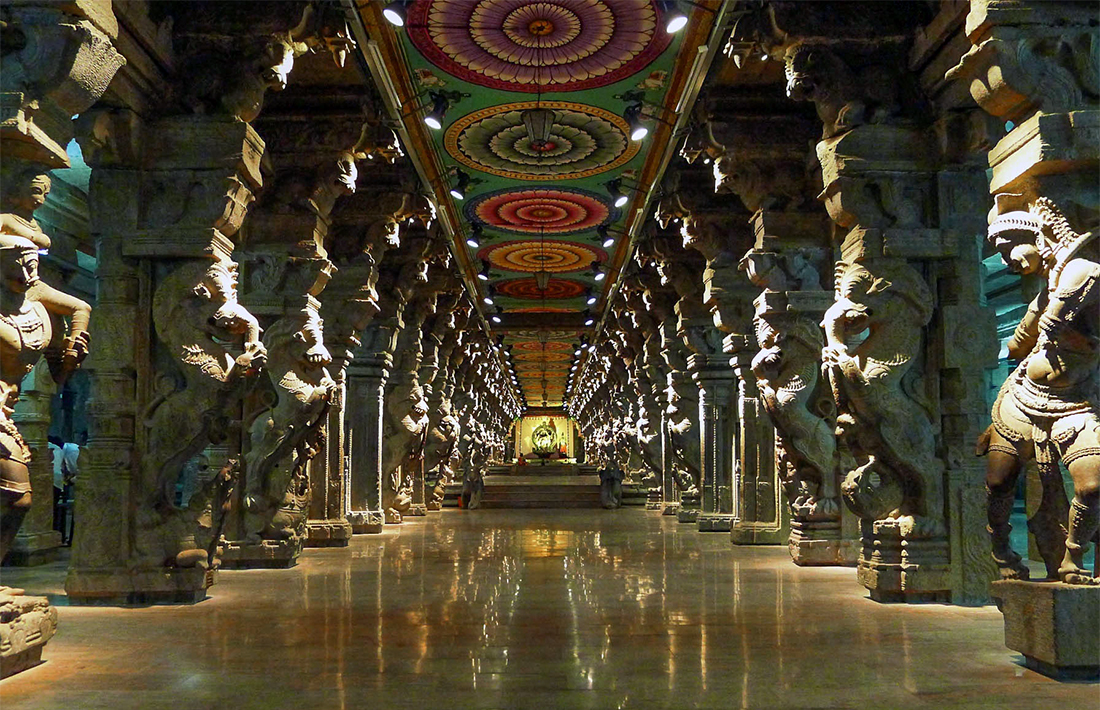
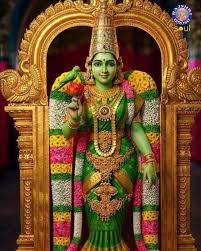
Arulmigu Meenakshi Sundareshwarar Temple, located in Madurai on the southern banks of the Vaigai River, is one of India’s oldest and most revered Hindu temples. Dedicated to Goddess Meenakshi (a powerful form of Parvati) and Lord Sundareshwarar (Shiva), this grand temple complex lies at the heart of ancient Madurai—often referred to as the “city of temples.” The temple is one of the Paadal Petra Sthalams, praised in early Tamil Saiva hymns (6th–9th century CE), and is among the most significant Shaivite pilgrimage centers in South India. The official temple website describes it as a living temple, where vibrant rituals, festivals, and cultural traditions continue daily even after thousands of years. Celebrated for its 14 towering gopurams, golden vimanams, sacred temple tank, and vast mandapams, the Meenakshi Temple stands as a hallmark of Dravidian architecture and Tamil heritage.
History
& Legends
Birth
of Goddess Meenakshi
According
to temple lore and Tiruvilaiyadal Puranam, the Pandya King Malayadwaja
Pandya and Queen Kanchanamalai performed a yajna seeking a son.
Instead, a divine girl with three breasts emerged from the sacred fire.
Lord Shiva proclaimed:
“Treat
her as a son. Her third breast will vanish when she meets her destined
consort.”
When
the princess matured and met Shiva, the prophecy came true—she became Meenakshi,
the warrior-goddess with captivating “fish-like eyes” (from meen = fish,
akshi = eyes).
The
Divine Wedding
Madurai’s
most celebrated festival, Meenakshi Thirukalyanam, narrates the wedding
of Meenakshi and Sundareshwarar. Lord Vishnu, as Meenakshi’s brother,
ceremonially gives her hand to Shiva in marriage.
Ancient
References
Invasions
& Rebirth
The
temple suffered devastation during invasions, especially under Malik Kafur
(1310–1311).
It was revived by:
They
rebuilt the gopurams, mandapams, temple tanks, and fortified walls, giving the
temple its present-day grandeur.
Architectural
Splendour
Meenakshi
Temple is one of the largest and most architecturally complex temples in
India. Its layout follows ancient Shilpa Shastra principles, arranged in
concentric squares symbolizing cosmic harmony.
Highlights
of the Architecture:
1. 14
Majestic Gopurams
Each
gopuram is adorned with thousands of colorful stucco sculptures of gods,
goddesses, demons, sages, warriors, and mythical beings.
Key
Gopurams:
The
gopurams alone have over 4,000 sculptures depicting Hindu legends.
2. Shrines
of Meenakshi & Sundareshwarar
Meenakshi
Shrine
Sundareshwarar
Shrine
In
theological hierarchy, the goddess Meenakshi holds the primary position,
unique among major South Indian temples.
3. Temple
Tank – Porthamarai Kulam (Golden Lotus Tank)
This
sacred tank, built in 1516 CE, measures 165 ft × 120 ft.
Believers consider bathing here spiritually purifying.
Frescoes around the portico depict divine wedding scenes of Meenakshi and
Sundareshwarar.
4.
Grand Mandapams (Halls)
Notable
Mandapams:
Every
mandapam displays breathtaking stone carvings portraying gods, dancers,
musicians, warriors, animals, mythical beings, and daily-life scenes.
Daily
Rituals & Temple Timings
Opening
Hours
Important
Poojas:
Daily
pujas include abhishekam, alankaram, aarti, and deity processions.
Major
Festivals
The
temple is famed for its grand celebrations:
1.
Chithirai Thiruvizha (April–May)
2.
Meenakshi Thirukalyanam
3.
Navaratri
4.
Aavanimoolam
5.
Alagar’s River Entry
6.
Float Festival (Theppam)
Temple
Facilities
The
temple provides:
Programs
are organized under the guidance of the Honorable Chief Minister of Tamil
Nadu, benefiting children and devotees.
Do’s
& Don’ts for Devotees
Do’s
Don’ts
Visitor
Guide
Map
From
Madurai Airport
From
Madurai Junction Railway Station
From
Mattuthavani Bus Stand
Madurai
is well connected by road, rail, and air to all major cities.
Nearby
Temples & Attractions
Koodal
Azhagar Temple – Vishnu temple with 3 Vishnu forms
Azhagar
Kovil – hill temple for Lord Vishnu, 21 km away
Tirupparankunram
Murugan Temple – one of the 6 abodes of Lord Murugan
Vandiyur
Mariamman Teppakulam – historic tank and temple
Narasingam
Yoga Narasimha Perumal Temple – ancient cave shrine
Sri
Mavoottru Velappar Temple – Murugan temple in forested hills
Each
destination is rich with heritage, architecture, and mythology, making Madurai
one of India’s most vibrant pilgrimage cities.