



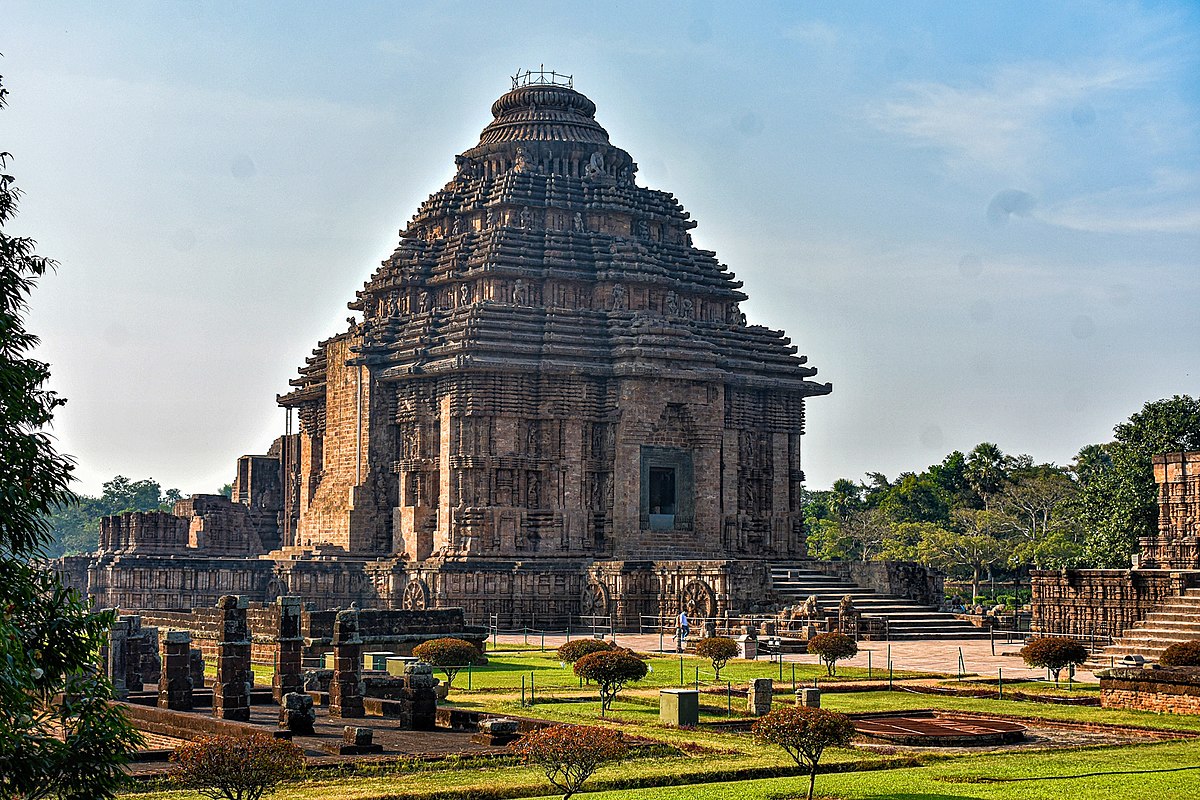
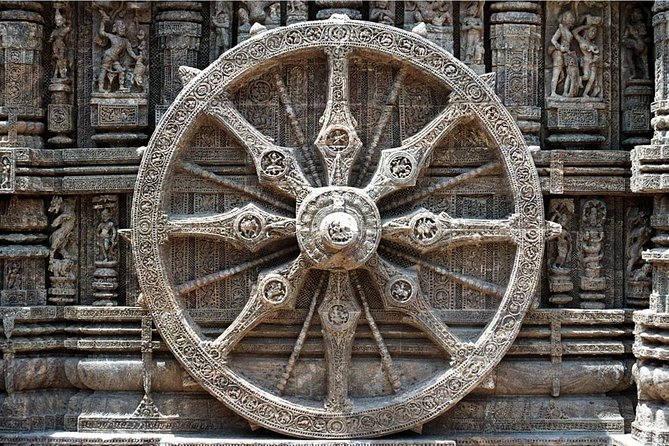
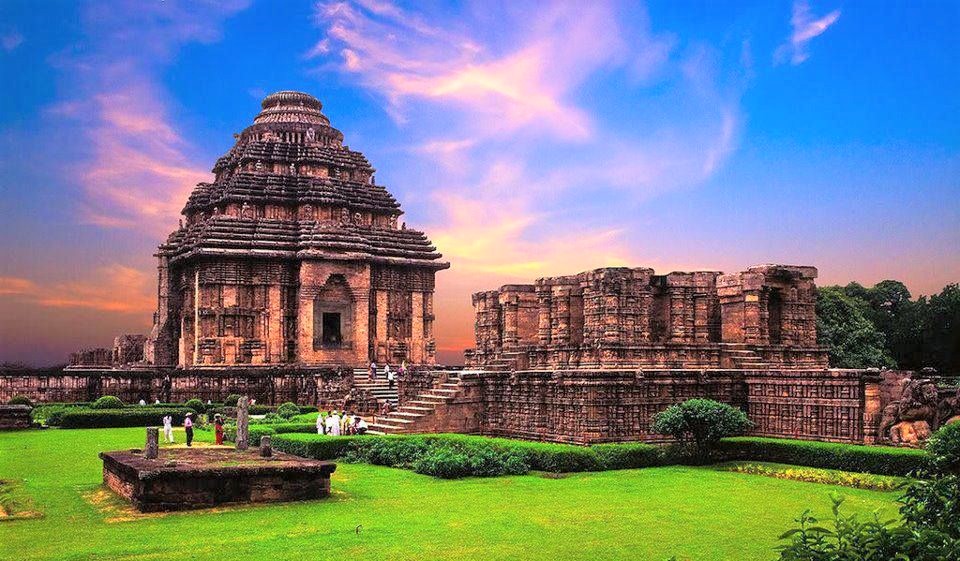
The Konark Sun Temple, also known as Konark Surya Mandir, is a 13th-century architectural marvel located in Konark, Odisha, around 35 km from Puri. Built in 1250 CE under the patronage of King Narasimhadeva I of the Eastern Ganga Dynasty, this iconic temple is dedicated to Surya Dev, the Sun God. The temple is designed as a colossal stone chariot, standing 100 feet high, pulled by magnificent horses and resting on 24 intricately carved wheels, each serving as a symbolic representation of time. Originally rising over 200 feet, only parts of the temple survive today. The massive audience hall remains intact, while the towering shikhara above the sanctum has collapsed over time. Recognized globally for its artistry, erotic carvings, scientific precision, and mythological iconography, Konark Sun Temple stands as the finest example of Kalinga architecture and is honored as a UNESCO World Heritage Site.
History
& Cultural Importance
In
Vedic literature, Surya is depicted as the illuminator of life and the
destroyer of darkness. His worship has roots in the Rigveda, where Surya
symbolizes knowledge, vitality, and enlightenment.
Konark,
historically known as Kainapara, was once a prosperous port city. While smaller
sun shrines existed here as early as the 9th century, the grand temple we see
today was constructed in the 13th century. Ancient texts mention Konark as one
of India’s primary centers for Surya worship, alongside Kalapriya (Mathura) and
Multan.
The
temple was built to celebrate both Surya Dev and the military victories of King
Narasimhadeva I. Its architecture reflects a perfect blend of creative genius,
engineering brilliance, astronomical knowledge, and artistic grandeur.
Architecture
The
Konark Sun Temple is a masterpiece of the Kalinga School of Temple Architecture,
characterized by curvilinear towers, ornate carvings, and artistic stone
compositions.
Key
Architectural Highlights
Structural
Layout
The
entire megastructure spans an enormous area of 857 ft × 540 ft, surrounded by
casuarina forests and coastal landscapes that enhance the temple’s natural
beauty.
Other
Temples & Monuments in the Complex
Mayadevi
Temple
An
11th‑century shrine older than the main temple. Once thought to honor Surya’s
wife, it is now considered an earlier sun temple with intricate carvings and a
Nataraja sculpture.
Vaishnava
Temple
Discovered
in 1956, this shrine contains idols of Balarama, Varaha, and Vamana–Trivikrama,
showing Konark’s inclusion of all major Hindu traditions, not just Surya
worship.
Ancient
Kitchen Complex
A
large community kitchen with cisterns, draining systems, cooking floors, and
stoves—used for feeding pilgrims and temple staff.
Sacred
Wells
Two
wells within the complex once supplied water for rituals, cooking, and pilgrim
use.
Nata
Mandir (Hall of Dance)
Positioned
in front of the main porch, it served as a venue for classical Odissi dance and
temple rituals. Its ruins still reveal exquisite artistry.
Deities
Worshipped
Even
though the sanctum has collapsed, the complex honors multiple deities:
Trimurti
Tridevi
Surya
Dev remains the principal deity symbolized through carvings and architecture.
Temple
Timings & Ticket Prices
Open Daily: 6:00 AM – 8:00 PM
Indians : INR 40/-
Foreigners: INR 600/-
Children under 15 - Free
How to Reach
Map
By Air
Nearest Airport: Biju Patnail International Airport - 65 KM
You can hire a taxi or take a bus to Konark.
By Train
Nearest Train Station: Puri (35 KM) and Bhubaneshwar (65 KM)
By Road
Well connected via NH-16, parking fee (INR 50/- for cars)
Nearby Temples & Tourist Attractions
Ramachandi
Temple & Beach
A
serene coastal shrine dedicated to Goddess Ramachandi.
Kuruma
Village
An
archaeological site linked to ancient Buddhist settlements, just 7 km from
Konark.
Konark
Archaeological Museum (ASI Museum)
Located
1.5 km from the temple, it preserves sculptures discovered during excavations.
Chandrabhaga
Beach
One
of Odisha’s most scenic beaches, popular for sunrise views and known for its
mythological significance.