



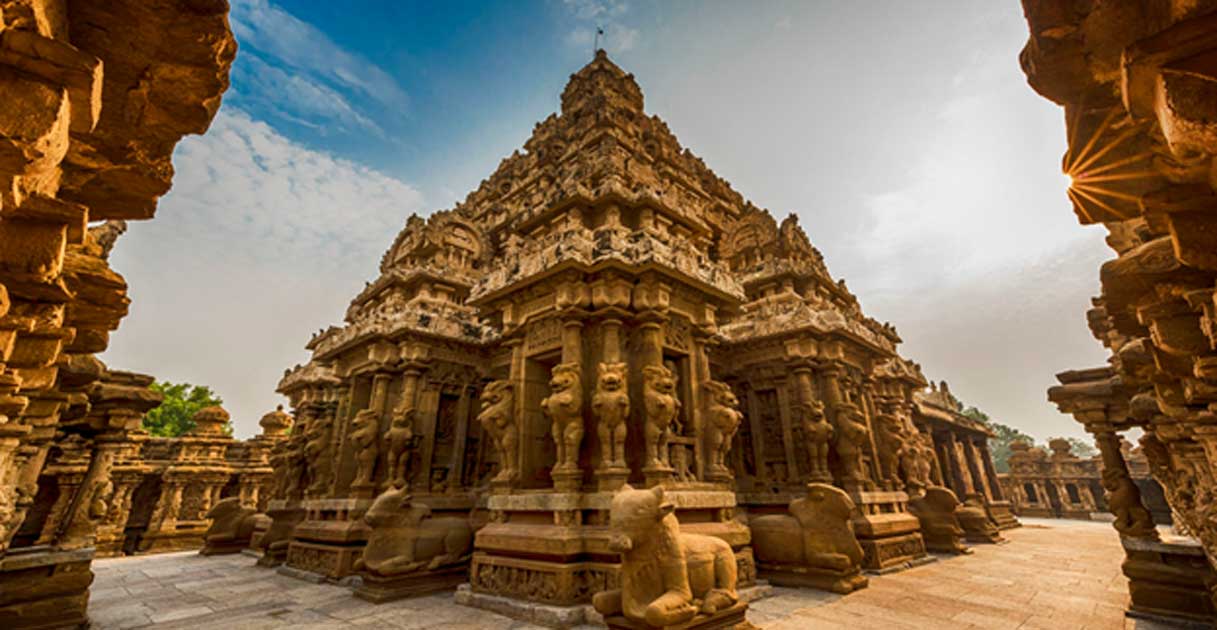
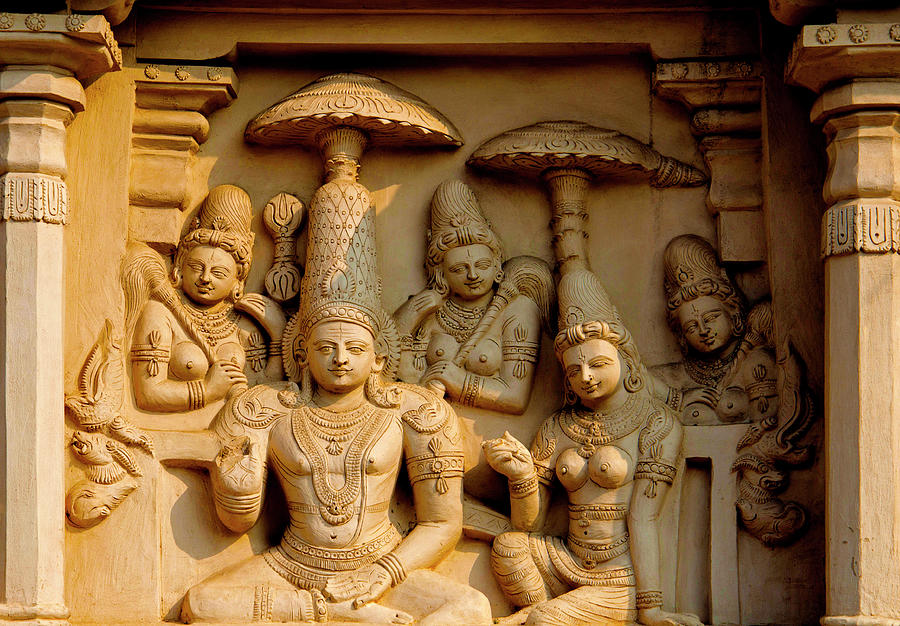
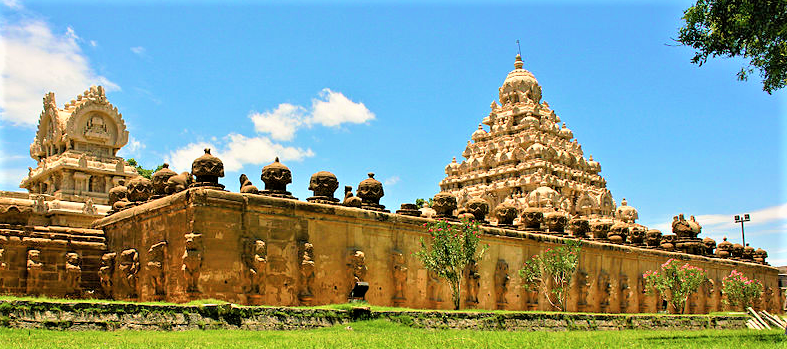
The Kailasanathar Temple in Kanchipuram, Tamil Nadu, is one of the oldest and most significant Hindu temples in South India. Dedicated to Lord Shiva, this ancient monument represents the early development of Dravidian temple architecture. Constructed around 700 CE by the Pallava king Narasimhavarman II (Rajasimha), the temple stands as a remarkable example of artistic excellence and religious devotion. It is widely regarded as the oldest surviving structure in Kanchipuram, often described as the “City of Thousand Temples.” [en.wikipedia.org], [tamilnadut....tn.gov.in] The temple is especially famous for its (i) Sandstone construction (often called the“Sand Temple”) (ii) Intricate carvings and early mural paintings (iii) Numerous mini shrines dedicated to Lord Shiva
🏛️ Historical
Significance
The
Kailasanathar Temple was built during the Pallava dynasty, an era known for
major advancements in temple architecture. The temple was commissioned by King
Rajasimha (Narasimhavarman II) and later expanded by his successors.
Key
historical highlights:
The
temple inscriptions and carvings provide valuable insights into early Tamil
culture, religious practices, and temple traditions.
🧱 Architecture of
Kailasanathar Temple
🏗️ Dravidian
Architectural Style
The
temple is considered a classic example of early Dravidian architecture,
featuring a well-planned layout and detailed stonework.
🔹 Main Architectural
Features
🛐 Temple Structure
& Layout
🔹 Sanctum
(Garbhagriha)
The
sanctum houses a Shiva Lingam, representing Lord Kailasanathar. The deity is
worshipped as the cosmic form of Shiva (Lord of Mount Kailash).
🔹 Circumambulatory
Passage
A
narrow inner pathway (pradakshina path) surrounds the sanctum. Symbolically, it
represents:
🔹 Mini Shrines
The
temple complex contains 58 small shrines dedicated to various forms of Lord
Shiva, built into niches along the inner wall.
🧑🎨
Sculptures & Art
The
Kailasanathar Temple is renowned for its fine stone carvings and ancient
artwork.
🎨 Key Highlights
🕉️ Religious Importance
The
temple is a major Shaivite pilgrimage site, attracting devotees throughout the
year.
🌟 Spiritual Features
🕰️ Temple Timings
🎉 Festivals Celebrated
Major
festivals celebrated at the temple include:
🚗 How to Reach
Kailasanathar Temple
 Map
Map
✈️ By Air
🚆 By Rail
🚌 By Road
📞 Contact Details
⭐ Why Visit Kailasanathar
Temple?