



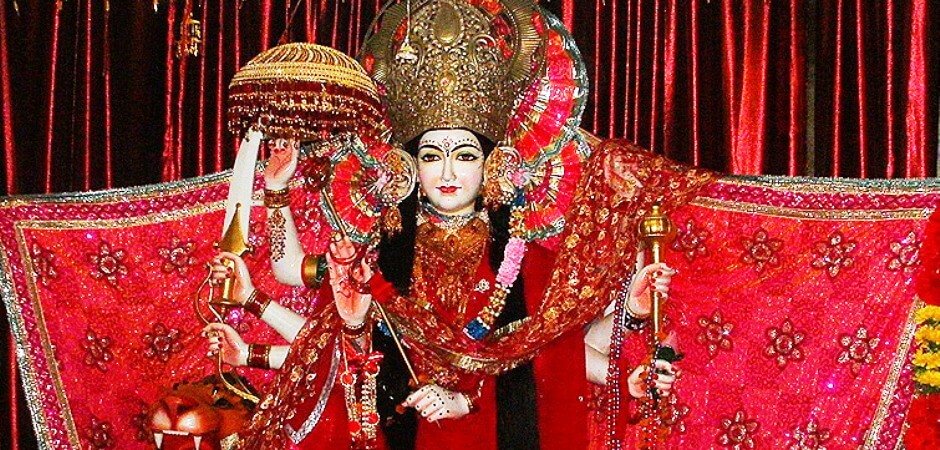
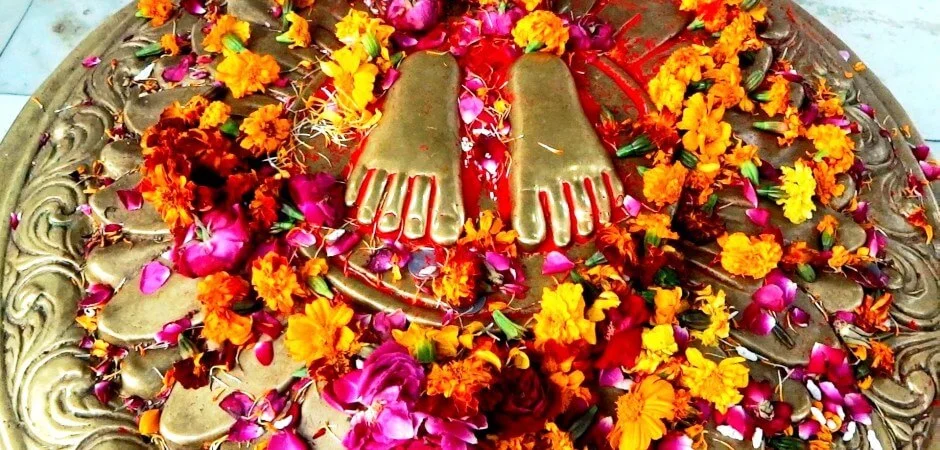
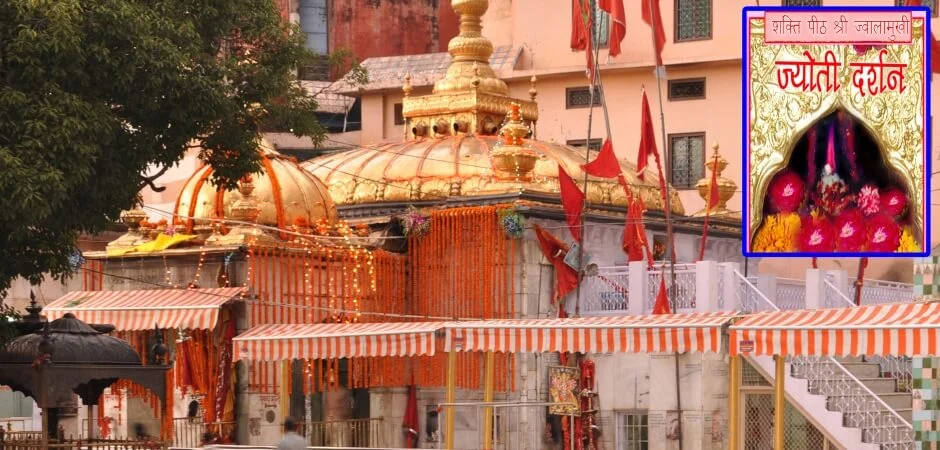
Shri Jwala Ji Temple, located in Jawalamukhi town of Kangra district, Himachal Pradesh, is one of the most sacred 51 Shakti Peethas of India. The temple is dedicated to Maa Jwala Ji, the eternal Goddess of Light, worshipped in the form of ever burning blue flames that emerge naturally from the rock crevices. Uniquely, Jwala Ji has no idol. Instead, devotees worship the nine sacred flames (Jyotis)—each representing a distinct form of the Divine Mother—making it one of the most extraordinary temples in the world. The temple is also known as “Kalidhar”, as it sits gracefully in the Shivalik mountain range. Believed to be originally built by the Pandavas, it has been a prominent pilgrimage center for thousands of years. Jwala Ji is revered especially during Navratri, when vibrant fairs and festivities draw devotees from India and abroad.
History
& Legends
Origin
of the Shakti Peeth
According to Hindu belief, when Goddess Sati sacrificed herself in the fire, Lord Shiva wandered the cosmos in immense grief carrying her body. To restore cosmic balance, Lord Vishnu used his Sudarshan Chakra to disintegrate Sati’s body. Wherever her body parts fell, Shakti Peethas were formed. At Jwalaji (610 m), Sati’s tongue is believed to have fallen, and since then the Divine Mother manifests here as eternal flames glowing intensely from the bedrock.
Discovery of the Flames Centuries ago, a cowherd noticed that one of his cows would return home without any milk. Curious, he followed her and witnessed a divine girl appearing from the forest, drinking the milk, and vanishing into a burst of light. He reported this to the local king. Remembering ancient legends, the king searched for the sacred spot but failed. Years later, the cowherd returned and reported seeing flames emerging from the mountainside. When the king visited, he witnessed the miraculous flames and built a temple around it. The temple was later renovated by the Pandavas, as reflected in the folk song:
“Panjan Panjan Pandavan Tera Bhawan Banaya”
Raja
Bhumi Chand Katoch – Founder King
The
earliest recorded royal patron was Raja Bhumi Chand Katoch, a devout
worshipper of Devi, who initiated the formal temple structure after being
guided to the sacred site in a divine vision.
The
Legend of Mughal Emperor Akbar
Mughal
Emperor Akbar, upon hearing of the miraculous flames, attempted to
extinguish them by covering them with iron sheets and flooding the area.
The flames continued to burn unharmed. Overwhelmed
by the goddess’s power, he offered a gold umbrella (Chatra) to the
temple. According to legend, the umbrella turned into an unknown metal,
symbolizing that the Goddess did not accept his offering. This
strengthened Akbar’s reverence for Jwala Ji.
Temple
Architecture
The
temple features:
The
temple’s unique architecture reflects centuries of devotion and contributions
from various rulers including Maharaja Ranjit Singh and Kharak Singh,
who donated gold and silver ornamentation.
Daily
Routine & Aarti Timings
Temple
Timings
|
Season |
Opening |
Closing |
|
Summer |
5:00
AM |
10:00
PM |
|
Winter |
6:00
AM |
9:00
PM |
Aarti
Timings
|
Aarti |
Summer |
Winter |
|
Mangal Aarti |
5:00–6:00
AM |
6:00–7:00
AM |
|
Bhog Aarti |
11:30
AM–12:30 PM |
11:30
AM–12:30 PM |
|
Evening Aarti |
7:00–8:00
PM |
6:00–7:00
PM |
|
Shayan Aarti |
9:30–10:00
PM |
8:30–9:00
PM |
Deity
Worshipped
Facilities
for Pilgrims
Visitor
Guide
Map
By
Road
Direct
bus services available from:
The
temple lies on the Dharamshala – Shimla highway.
By
Rail
Nearest
railway station:
By
Air
Nearest
airports:
Nearby
Temples & Attractions
Nearby
Tourist Spots
Contact
Information
Phone: 01970‑223100
Address: Jawala Ji Temple Road, Jawalamukhi
Kangra District, Himachal Pradesh – 176031