



Gudi Padwa, also known as Samvatsar Padvo, marks the Maharashtrian and Konkani New Year. It is celebrated on the first day of the Chaitra month, which also marks the beginning of spring and the start of the Hindu lunisolar calendar. This festival symbolizes new beginnings, victory, and prosperity, making it one of the most important celebrations in Maharashtra and the Konkan region.
🌟 Significance of Gudi
Padwa
Gudi
Padwa carries deep mythological and cultural importance. According to Hindu
legends:
✔ Creation of the Universe
The
day marks the moment when Lord Brahma created time and the cosmos, making it
the start of an auspicious new cycle.
✔ Coronation of Lord Rama
Many
believe Gudi Padwa commemorates Lord Rama’s coronation in Ayodhya after His
victory over Ravana. The hoisted Gudi symbolizes this triumph.
✔ Beginning of the
Shalivahana Era
Another
belief connects the festival to King Shalivahana’s victory over the Huns in the
1st century, marking the beginning of the Shalivahana Shaka calendar.
✔ Association with Shiva
According
to scholar Anne Feldhaus, rural celebrations link Gudi Padwa with Lord Shiva’s
cosmic dance, as devotees carry Gudi kavads to Shiva shrines.
Gudi
Padwa signifies victory, abundance, and divine blessings, making it an ideal
day for starting new ventures.
🕉 Deities Worshipped
The
festival honors the holy Trimurti (Brahma, Vishnu, Shiva) and the Tridevi
(Saraswati, Lakshmi, Parvati).
Devotees invoke these deities for:
🙏 Rituals and Puja
Vidhi
The
day begins with:
✔ Ceremonial Bath
A
purifying bath at sunrise marks the start of the New Year.
✔ House Decoration
Homes
are adorned with:
✔ Gudi Hoisting
The
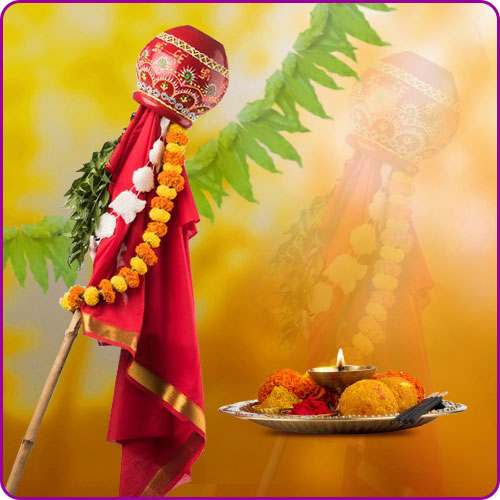
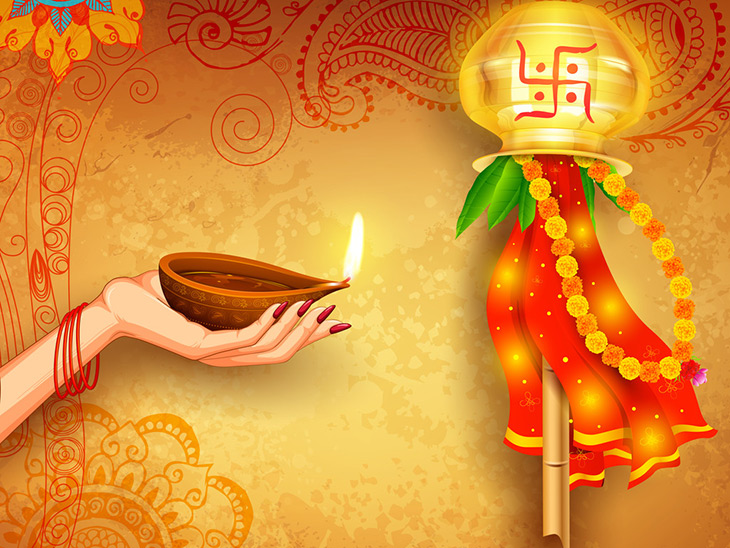
highlight of the festival is erecting the Gudi, which is made using:
The
Gudi symbolizes:
After
performing the puja, the Gudi is hoisted outside the home or on a balcony.
✔ Connection with Chaitra
Navratri
In
North India, Chaitra Navratri begins on the same day as Gudi Padwa.
🎉 How Gudi Padwa is
Celebrated
Traditional
festival dishes include:
Families
gather for feasts, prayers, and visits to temples.
🍛 Traditional Foods
for Gudi Padwa
Here
are some popular celebratory dishes enjoyed during the festival:
✔ Shrikhand
A
sweet yogurt dessert available in many variations like:
✔ Puran Poli
Soft
flatbreads stuffed with jaggery, chana dal, and cardamom.
✔ Vegetable Bhakarwadi
Crispy
spirals with a tangy-sweet filling, sometimes stuffed with vegetables.
✔ Kothimbir Wadi
Steamed
then shallow-fried coriander gram‑flour cakes.
✔ Kesari Bhaat
Basmati
rice cooked with saffron, ghee, sugar, and topped with dry fruits.
✔ Puliyodarai
A
tangy-sweet rice preparation wrapped in banana leaves for a traditional touch.
✔ Pal Payasam
Rice-milk
kheer made richer with nuts; can be flavored with fruits or jaggery.
✔ Kharvas
A
soft steamed milk pudding made using colostrum milk (rare and traditional).
✔ Moong Dal Til Wada
Crispy
moong dal fritters enhanced with the nutty flavor of sesame seeds.
🌍 Where Gudi Padwa is
Celebrated
Primarily
celebrated in:
🎁 Popular Gudi Padwa
Gifts
📍 Best Places to
Experience Gudi Padwa
These
regions host vibrant processions, cultural performances, community feasts, and
traditional pujas.
📅 Date & Time of Gudi Padwa 2026
Gudi
Padwa is celebrated on the first day of the Chaitra month.
Date - March 19, 2026
Pratipada begins : Thursday, March 19,2026 6:52 a.m.
Pratipada ends : Friday, March 20, 2026 4:52 a.m.
🏛 Public Holiday
Gudi
Padwa is not a national public holiday, but is observed regionally in: