



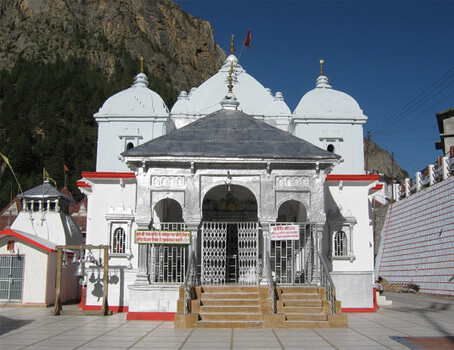
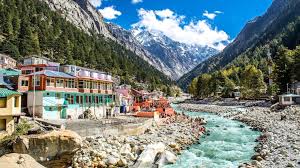
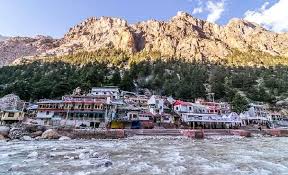
Gangotri Temple, located in the serene town of Gangotri in the Uttarkashi district of Uttarakhand, is one of the most revered spiritual destinations in India. Situated at an elevation of 3,100 metres, this Himalayan shrine is dedicated to Goddess Ganga, worshipped here in her most sacred earthly form. Built in the early 18th century by Gorkha General Amar Singh Thapa, the temple stands majestically on the left bank of the Bhagirathi River, surrounded by serene deodar and pine forests. This holy site marks the origin of the River Ganga—known locally as Bhagirathi—which emerges from the Gaumukh glacier, 18 km upstream. Gangotri is one of the four revered dhams of the Chota Char Dham Yatra, making it a major pilgrimage center for devotees seeking purity, liberation, and divine blessings. Close to the temple lies the sacred Bhagirath Shila, where King Bhagirath is believed to have meditated to bring Ganga down from heaven for the salvation of his ancestors.
Belief
& History
According
to Hindu belief:
Historically:
Gangotri
holds profound religious significance as the origin point of the Holy Ganga,
considered the river of salvation (moksha).
Architecture
of Gangotri Temple
Gangotri
Temple is built in the elegant Nagara style of North Indian temple
architecture.
Key
Architectural Highlights
Deities
Inside the Sanctum
Along
with Goddess Ganga’s idol, the inner sanctum houses the idols of:
Surrounding
the sanctum are small shrines dedicated to:
Submerged
Natural Shivling
A
natural rock Shivling, visible only in winter when water recedes, lies
submerged in the icy Bhagirathi waters near the temple. It is said to be the
very spot where Lord Shiva received Ganga in his hair.
Religious
Significance
Gangotri
is believed to grant:
It
is customary for devotees to collect Gangajal (holy water) to offer to Lord
Shiva, particularly at the Kedarnath Temple.
The
temple complex also marks the site where the Pandavas performed deva‑yagna to
atone for the loss of life in the Mahabharata war.
Darshan
& Daily Ritual Timings
Temple
Timings
Evening
Aarti
Daily
Temple Rituals Include:
Major
Festivals Celebrated
Ganga
Saptami (April)
Marks
the descent of Mother Ganga to earth; special Shringar Puja is performed.
Ganga
Dussehra (May–June)
Celebrates
the day when Lord Shiva released Ganga onto earth.
Janmashtami,
Vijaya Dashami, Diwali
These
Hindu festivals are observed with grandeur and devotion.
Yam
Dwitiya (Closing Day of Gangotri Temple)
The
idol of Goddess Ganga is ceremonially taken to Mukhwa village for winter
worship, accompanied by her golden crown and Bhagirath’s idol.
How
to Reach Gangotri
Map
By
Air
By
Rail
By
Road
Gangotri
is well-connected by road to:
Buses
and shared taxis run frequently during the yatra season.
Nearby
Attractions & Temples
1.
Submerged Shivling (Shiva Rock)
Visible
in winter, symbolizing Shiva’s reception of Ganga.
2.
Gaumukh Glacier & Tapovan
3.
Bhairon Ghati & Bhairon Nath Temple
Lord
Bhairon Nath is believed to be the guardian of Gangotri Dham.
4.
Lanka Chatti
Home
to one of the region’s highest river bridges over the Jhanvi River.
Contact
Information
Email:
support-ucdb@uk.gov.in
Address: Gangotri, Uttarakhand – 249135
Official Website:
https://badrinath-kedarnath.gov.in/AboutUs/gangotri.aspx