



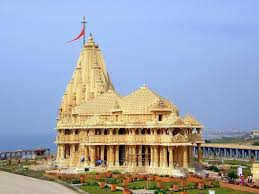
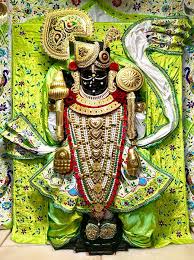
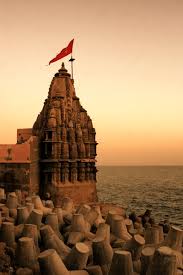
The Dwarkadhish Temple, also known as the Jagat Mandir, is one of India’s most revered Hindu temples dedicated to Lord Krishna, worshipped here as Dwarkadhish – “King of Dwarka.” Situated in Dwarka, Gujarat, this ancient temple is a major pilgrimage site forming an integral part of the Char Dham Yatra, along with Badrinath, Jagannath Puri, and Rameswaram. The main temple structure, known as the Nija Mandir or Jagat Mandir, is a five storied marvel supported by 72 intricately carved pillars. Based on archaeological findings, the temple is believed to be over 2,000 years old, with significant renovations and expansions carried out in the 15th and 16th centuries. The Dwarkadhish Temple follows the Pushtimarg tradition established by Jagadguru Vallabhacharya and is managed according to the guidelines of the Vallabh Sampradaya.
History
of Dwarka & the Temple
Dwarka
is one of the Sapta Puris, the seven ancient holy cities of India.
According to Hindu scriptures, the city was established by Lord Krishna
after he left Mathura. It is believed that Krishna ruled from this magnificent
coastal kingdom.
Origins
of the Temple
According
to legend:
The
temple was also visited by Adi Shankaracharya in the 8th century, and a
stone memorial dedicated to him still exists within the complex.
Dwarkadhish
Temple is also one of the 108 Divya Desams, making it a sacred Vishnu
shrine mentioned in the Divya Prabandham.
Archaeological
Perspectives
Marine
excavations near the coast of Dwarka suggest submerged constructions,
indicating a prosperous ancient port city consistent with scriptural
references.
Architecture
of Dwarkadhish Temple
The
Dwarkadhish Temple is an outstanding example of Chaulukya architecture,
featuring:
Key
Architectural Features
Temple
Layout
The
black stone idol of Lord Krishna stands gracefully and is decorated with
royal adornments following Pushtimarg traditions.
Deity
Worshipped
Daily
Darshan & Aarti Timings
Morning
Schedule
Evening
Schedule
Major
Festivals Celebrated
Janmashtami
The
most important festival, celebrating the birth of Lord Krishna with grandeur,
bhajans, and special rituals.
Holi
Celebrated
with devotion and joy, symbolizing Krishna’s playful pastimes.
Rukmini
Vivah
A
grand ritual reenacting the divine marriage of Krishna and Rukmini Devi.
How
to Reach Dwarkadhish Temple
Map
By
Air
By
Rail
By
Road
Dwarka
is accessible from major cities via well‑maintained highways.
Regular buses, taxis, and private cabs operate from Ahmedabad, Jamnagar,
Porbandar, Rajkot, and other nearby cities.
Nearby
Temples & Pilgrimage Sites
Nageshwar
Jyotirlinga
One
of the 12 sacred Jyotirlingas, located about 25–30 minutes from Dwarka.
Rukmini
Devi Temple
A
beautiful 12th‑century temple dedicated to Rukmini Devi, located 2 km from
Dwarka.
Kusheshwar
Mahadev Temple
An
ancient temple believed to be Dwarka’s presiding deity in earlier times.
Navgrah
Temple
Located
near the temple entrance, featuring Kashi Vishwanath Shivlinga, Gayatri Devi,
Kolva Bhagat Temple, etc.
Temples
within the Main Complex
Nearby
Tourist Attractions
Beyt
Dwarka
An
island believed to be Krishna’s actual residence with ancient temples, white‑sand
beaches, dolphin sightings, camping, and water sports.
Gomti
Ghat
A
peaceful spot behind the temple where the Gomti River meets the Arabian
Sea—ideal for holy dips and sunset viewing.
Bhadkeshwar
Mahadev Temple
A
scenic Shiva temple surrounded by the sea, known for its peaceful ambience and
enchanting aarti.
Contact
Information