



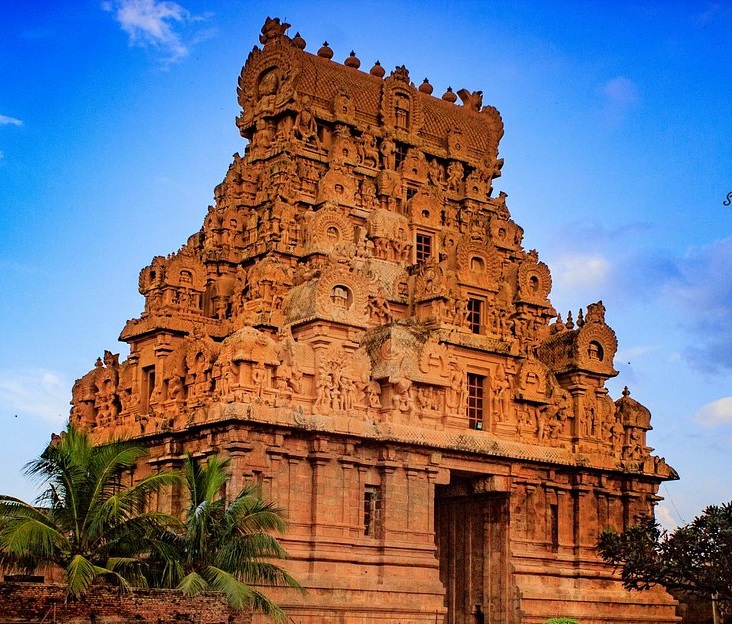
Arulmigu Brihadeeswara Temple, also known as Rajarajeswaram or Peruvudaiyar Kovil, is one of the grandest temples of India, dedicated to Lord Shiva. Located on the southern bank of the River Kaveri in Thanjavur, Tamil Nadu, the temple is a magnificent example of Dravidian and Chola architectural excellence. Built between 1003–1010 CE by the great Chola king Rajaraja Chola I, the temple forms a part of the UNESCO World Heritage Site – “Great Living Chola Temples”, alongside the temples of Gangaikonda Cholapuram and Airavatesvara Temple. The temple is revered as Dakshina Meru (Meru of the South) due to its majestic scale and engineering mastery. Constructed entirely from granite, it features (i) One of the tallest vimanas in South India (over 63 meters) (ii) One of the largest Shiva lingas in the country (iii) A vast colonnaded prakara (corridor) (iv) Exquisite sculptures, inscriptions, murals, and bronzes, including the famed 11th century Nataraja commissioned here. Brihadeeswara Temple is among the most visited heritage sites in Tamil Nadu.
History
of the Temple
Chola
Empire & Architectural Brilliance
The
temple was conceived and built under the leadership of Rajaraja Chola I,
symbolizing the power, devotion, and artistic supremacy of the Chola dynasty.
Before
the Cholas, architectural styles were influenced by:
However,
the Cholas established a distinct monumental style, fully realized in
Brihadeeswara.
Growth
& Alterations Over Centuries
Over
1000+ years, the temple underwent:
Key
contributions came from:
Despite
invasions, wars, and natural wear, the temple remains structurally astonishing
and spiritually vibrant.
Architecture
Brihadeeswara
Temple is an architectural marvel, renowned for its scale, symmetry,
engineering precision, and sculptural richness.
Key
Features:
1.
Massive Courtyard & Prakaras
2.
Entrance Gopurams
3.
Nandi Mandapam
4.
Sanctum & Sri-Vimana
The
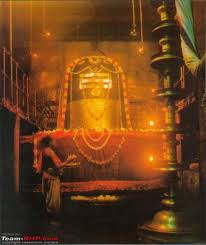
sanctum (garbhagriha) houses a colossal Shiva Linga.
Above
it rises the breathtaking 63.4‑meter vimana, one of the tallest masonry
towers in the world.
5.
Mandapas
6.
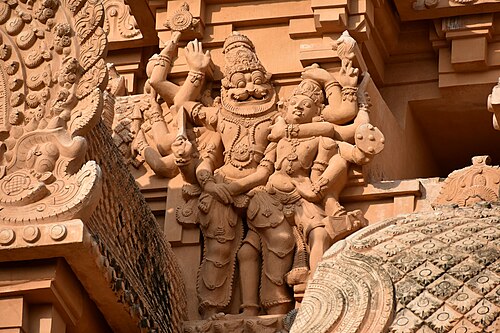
Sculptures & Dance Karanas
The
upper walls display 81 of the 108 karanas described in Bharatanatyam’s
Natya Shastra—one of the earliest physical depictions of classical dance.
7.
Shrines Inside the Complex
Dedicated
to:
Every
shrine reflects Chola craftsmanship and religious inclusivity.
Murals
The
temple houses priceless Chola frescoes depicting:
These
were discovered beneath Nayaka-era paintings and carefully restored by the
Archaeological Survey of India using advanced de-stucco techniques.
Inscriptions
Over
1,000 years of inscriptions in Tamil & Grantha scripts document:
These
inscriptions make Brihadeeswara one of India’s most historically valuable
temples.
Deity
Temple
Timings
Morning:
6:00 AM – 12:30 PM
Evening: 4:00 PM – 9:00 PM
(Main
sanctum closed between 12:30 PM and 4:00 PM)
Daily
Pooja Timings:
Large
crowds visit on Sundays and festival days.
Major
Festivals
The
temple becomes a vibrant cultural hub during these events.
How
to Reach
Map
By
Air
By
Rail
By
Road
Nearby
Attractions
1.
Airavateswara Temple (Darasuram) – UNESCO Site
Renowned
for musical steps, exquisite sculptures, and Dravidian style.
2.
Ramaswamy Temple
Nayak-era
temple with Ramayana carvings and a 3-tier gopuram.
3.
Kampaheswarar Temple
Features
unique Sarabeswarar idol and Chola-era architecture.
4.
Swetha Vinayagar Temple
Home
to a rare white Ganesha idol formed from sea foam.
5.
Swamimalai Murugan Temple
One
of the Arupadai Veedu (six holy abodes of Murugan).
6.
Aiyarappar Temple
9th-century
temple with Kamalalayam Tank & giant stone Nandi.
7.
Chakrapani Temple
Dedicated
to Vishnu as Chakrapani with a unique five-faced Hanuman.
8.
Thanjai Mamani Koil
One
of the 108 Divyadesam temples, featuring multiple Vishnu idols.
Contact
Information